Beverage giant Lion announced a proposal to close the historic James Boag’s Brewery in Launceston by November 2026, ending 145 years of continuous local beer production. Quoting combination of severe cost inflation and a long-term decline in the national beer market, Lion revealed that the iconic 1881 facility has been running at just one-fifth of its capacity. The shutdown is putting 42 manufacturing jobs at risk and moving all future brewing of the famous brand to mainland Australia.
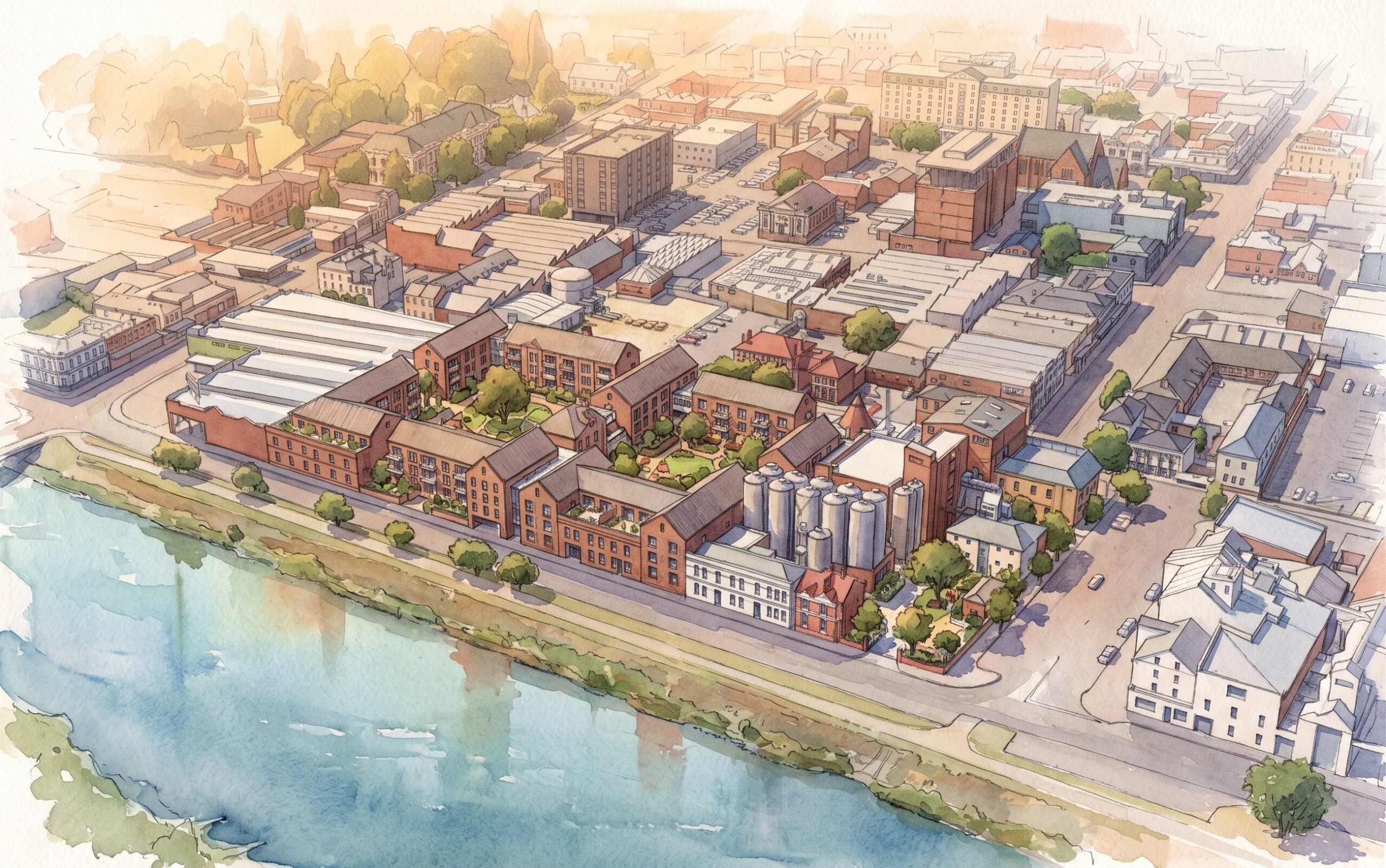
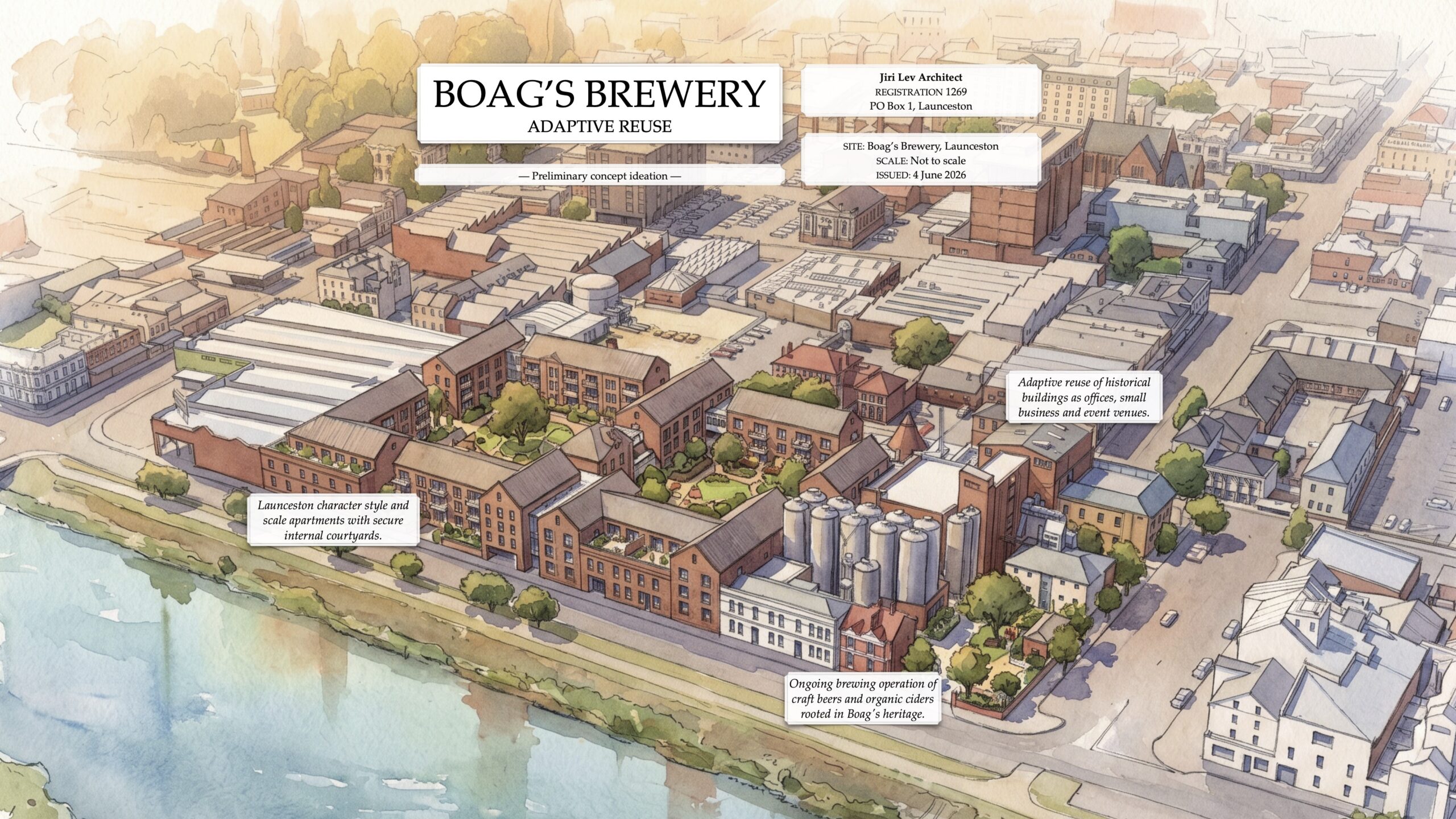
One option worth looking at would be adaptive reuse of the whole precinct, including:
Ongoing brewing operation of craft beer and organic cider rooted in Boag’s heritage.
Adaptive reuse of historical buildings as offices, small business and event venues.
Launceston character style and scale apartments with secure internal courtyards.
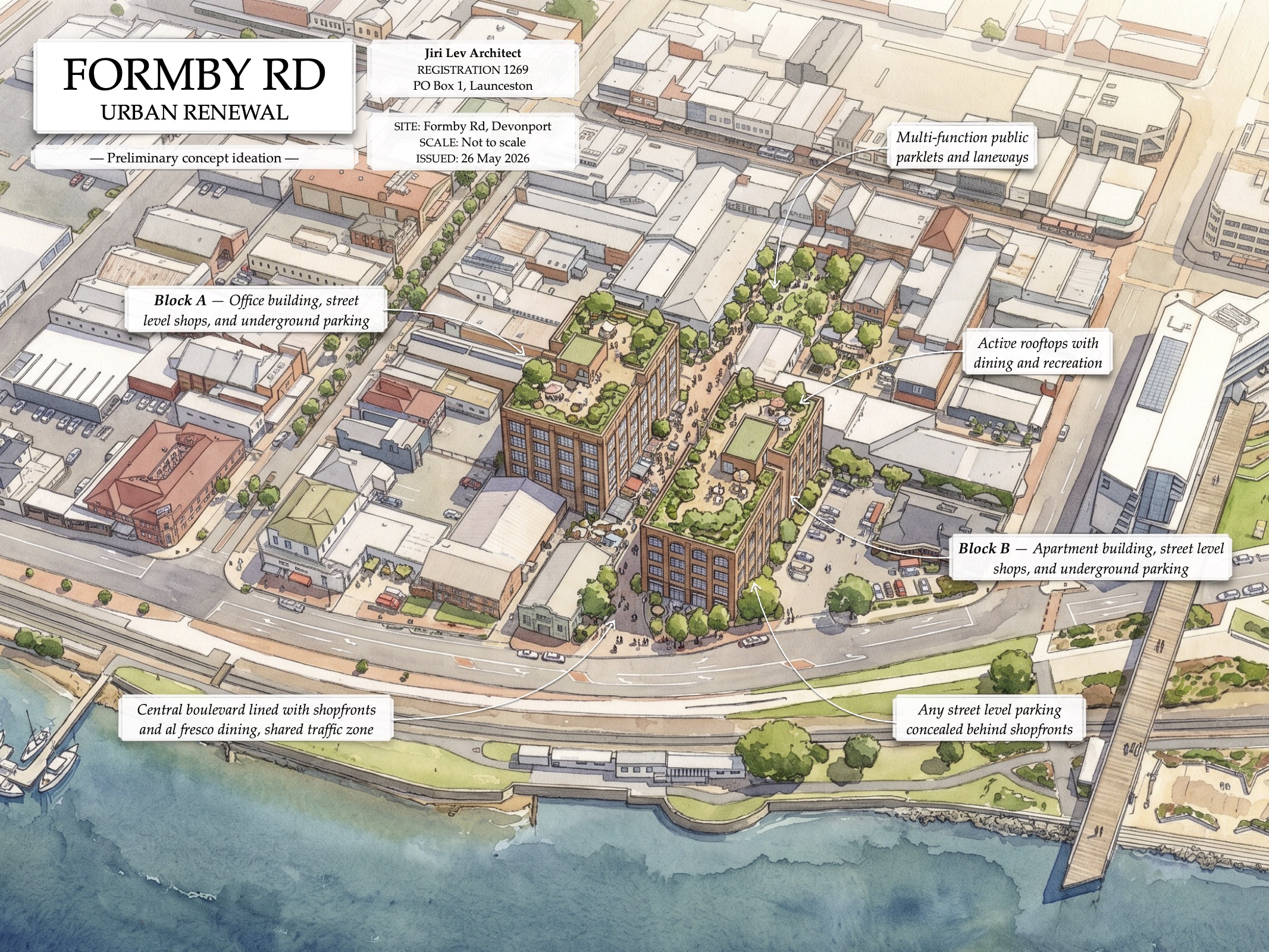
Devonport City Council is advancing the next phase of its long-term renewal strategy by opening up two prime development sites in the heart of the CBD. This vision features a dual-purpose urban upgrade: a modern commercial building housing dedicated office and retail spaces, alongside a high-end, multi-storey residential apartment complex constructed directly over a public multi-level car park.
The published early 3D visualisations and massing models (see here) raise concerns that the location could be dominated by two uninspiring structures of generic, mass-produced design with only arbitrary, if any, connection or contribution to the city’s genius loci.
To avoid this, I put forward a few simple ideas:
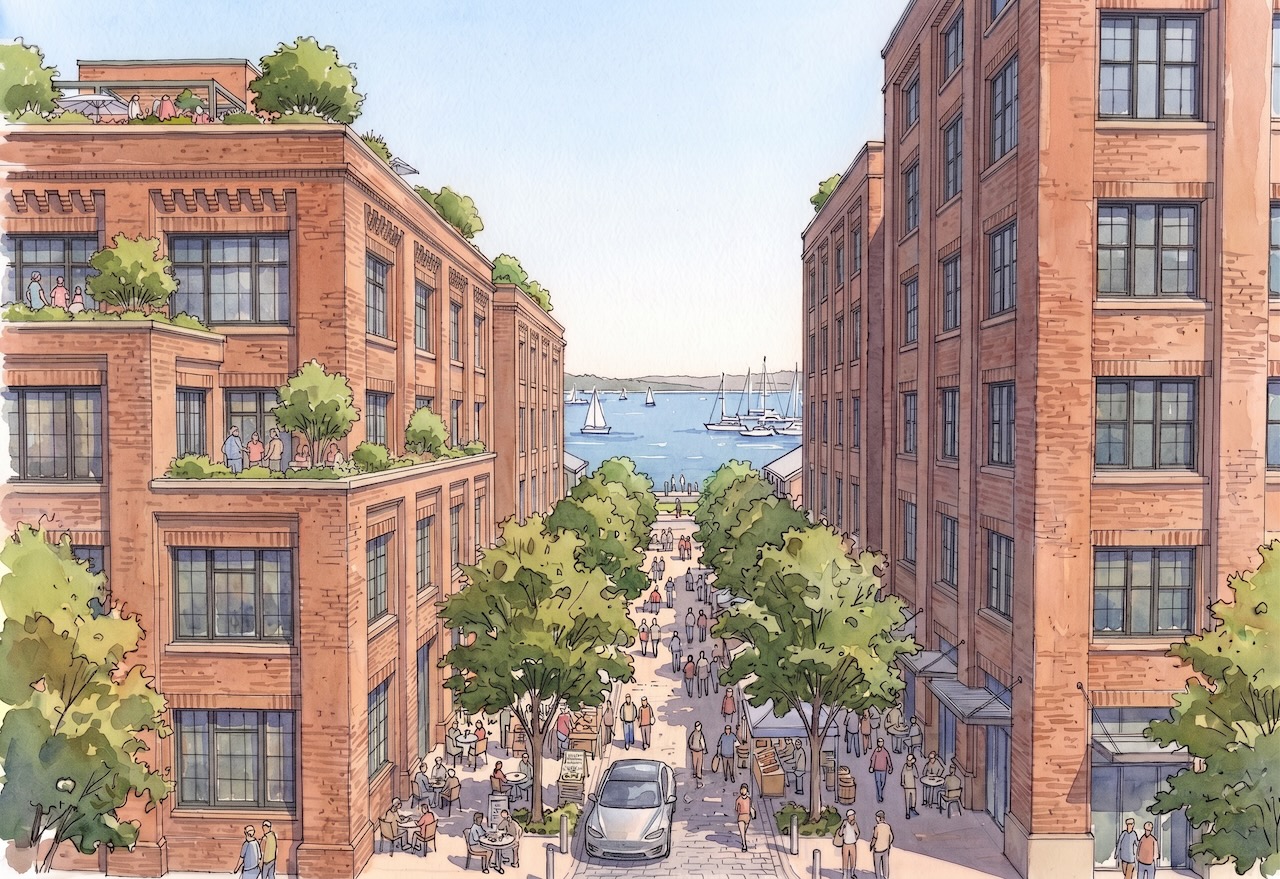
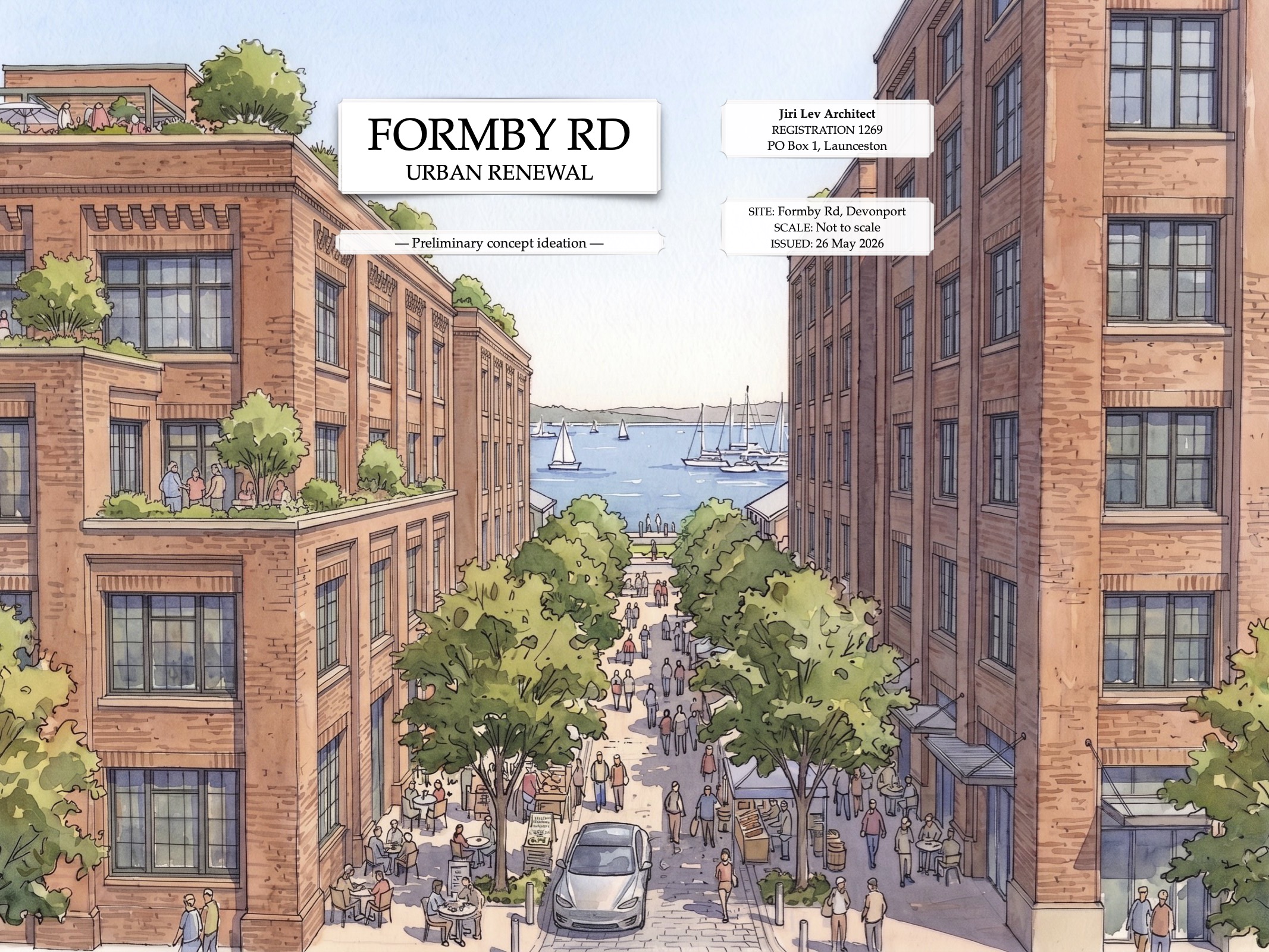
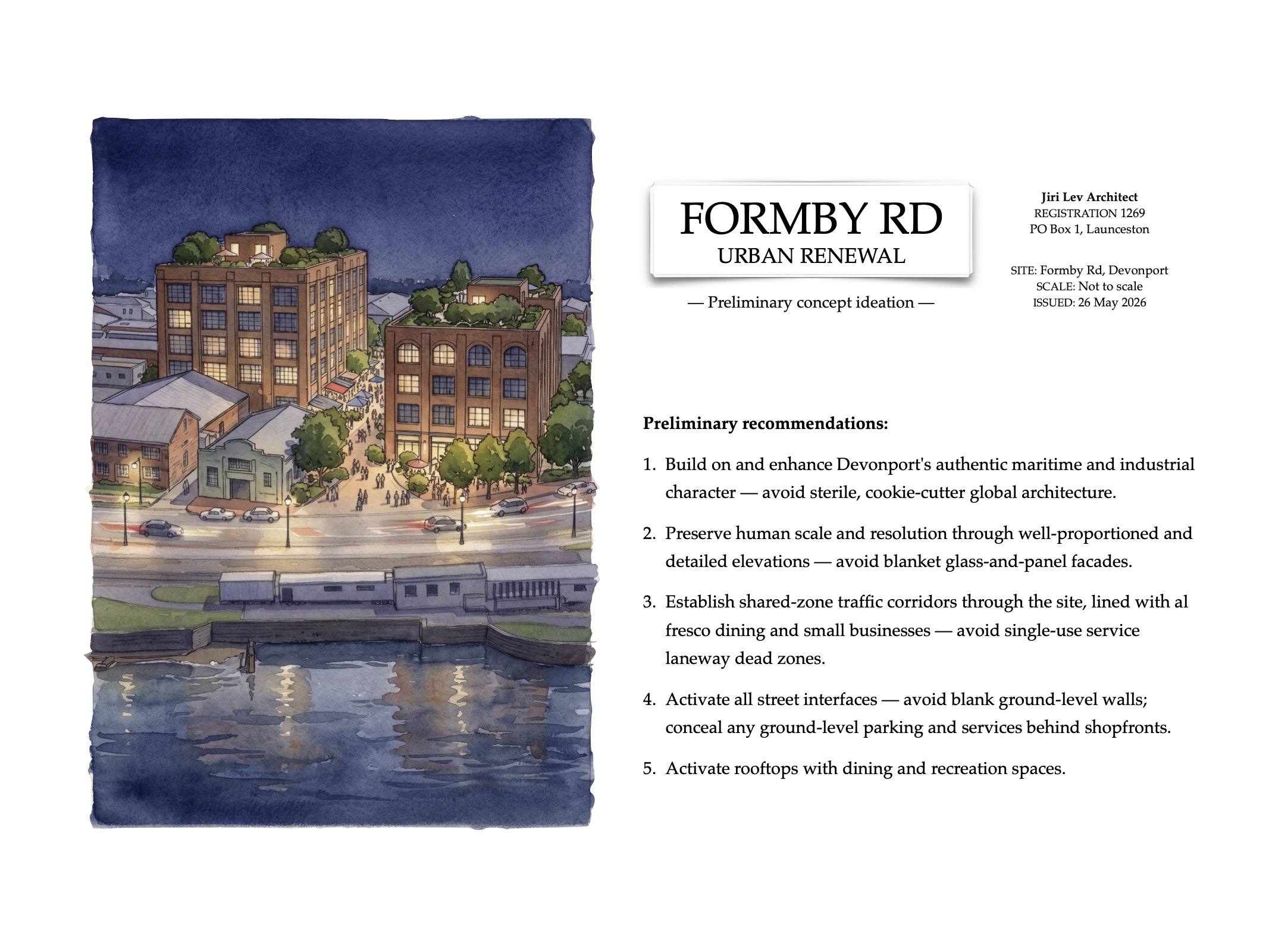
Build on and enhance Devonport’s authentic maritime and industrial character — avoid sterile, cookie-cutter global architecture.
Preserve human scale and resolution through well-proportioned and detailed elevations — avoid blanket glass-and-panel facades.
Establish shared-zone traffic corridors through the site, lined with al fresco dining and small businesses — avoid single-use service laneway dead zones.
Activate all street interfaces — avoid blank ground-level walls; conceal any ground-level parking and services behind shopfronts.
Activate rooftops with dining and recreation spaces.
Notably, the attached illustrations depart from other new buildings nearby, such as Paranaple, the adjacent hotel and lookout platform. This is intentional. These recent structures could just as easily exist in Melbourne, Sydney, or anywhere else in the world. While those buildings could be functional and well-built, they tell us nothing about the city of Devonport other than that it wanted a new building and got one.
It is similar to modern public art: unless you read an explicit explanatory statement, it makes no sense.
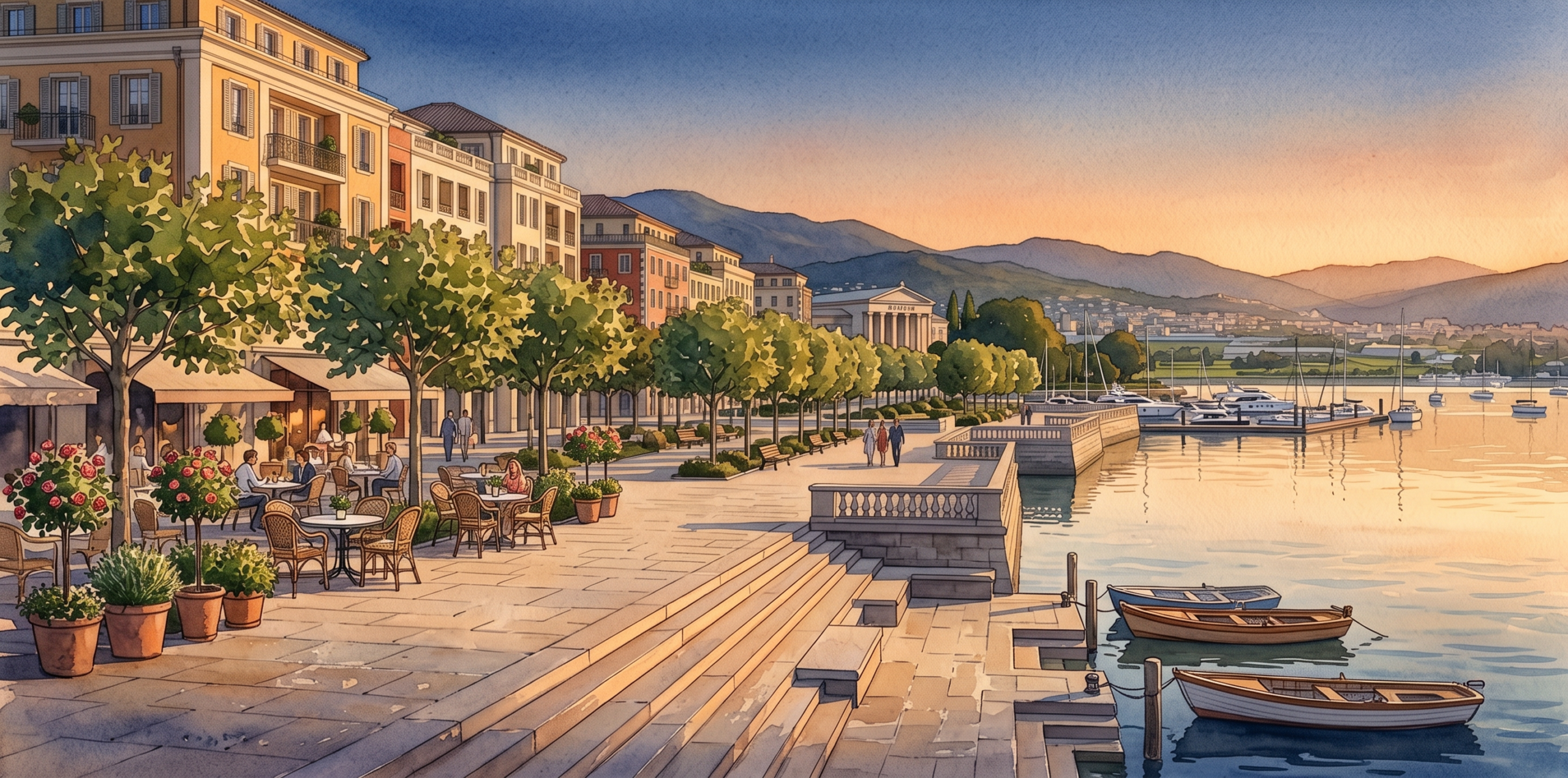
Why do people prefer to spend holidays in Italy or Greece over Newcastle or Geelong? It is because of the culture, the landscapes, and the uniquely local, traditional architecture—both old and new. While Australia has the first two in abundance, it very much lacks the third.
Just because there are some recent (and less recent), plain, expedient, non-specific buildings that could be plonked just about anywhere in the world, it does not mean one cannot take a step back and and correct the trajectory by leaning into what makes Devonport Devonport, Tasmania Tasmania, and Australia Australia.
In this particular case, I took inspiration from the city’s warehouses, schools, and other larger buildings, built with craftsmanship from local materials, however there are plenty of other appropriate local styles that can be drawn from—these images are mere illustrations, not a design proposal.
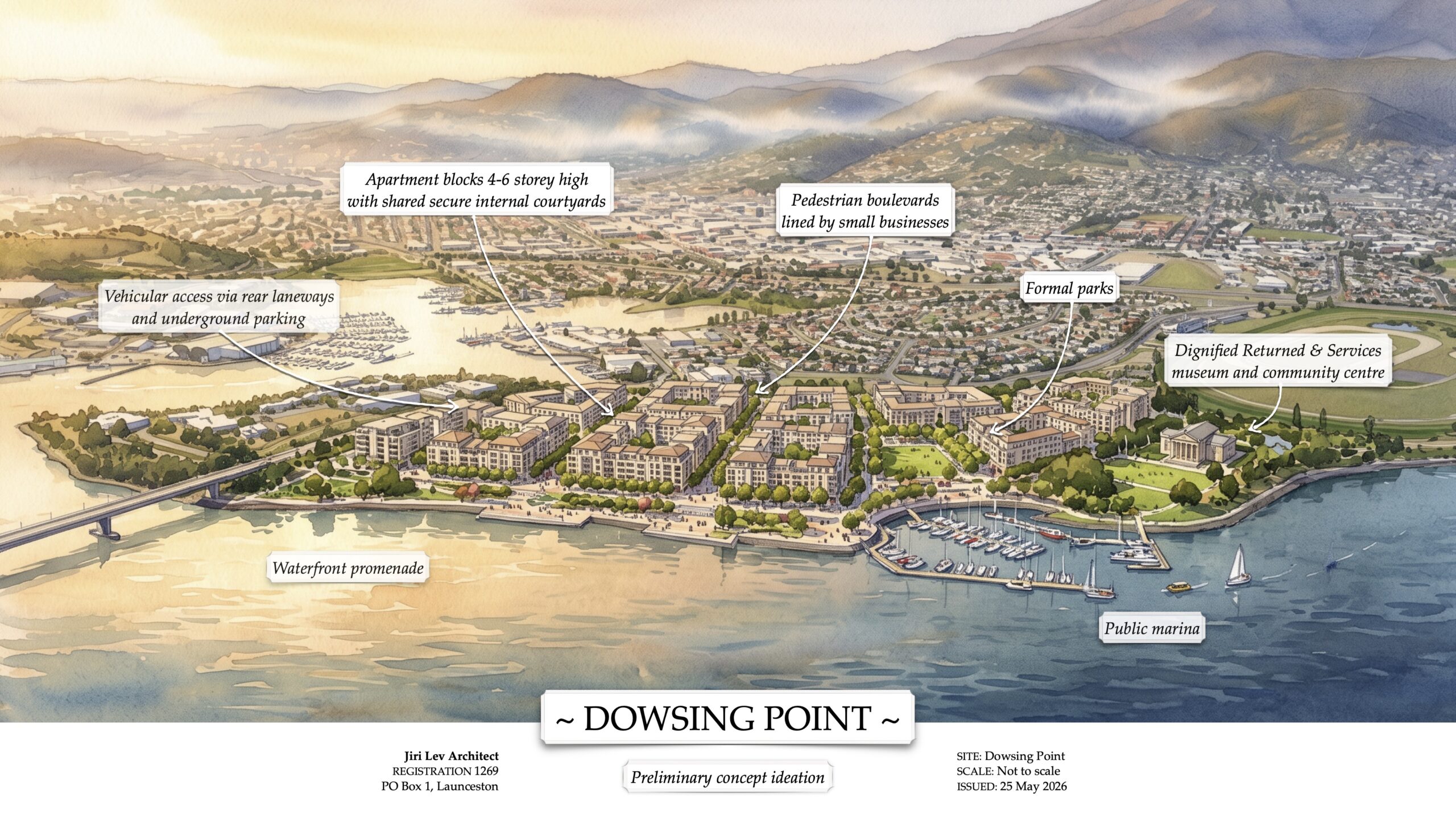
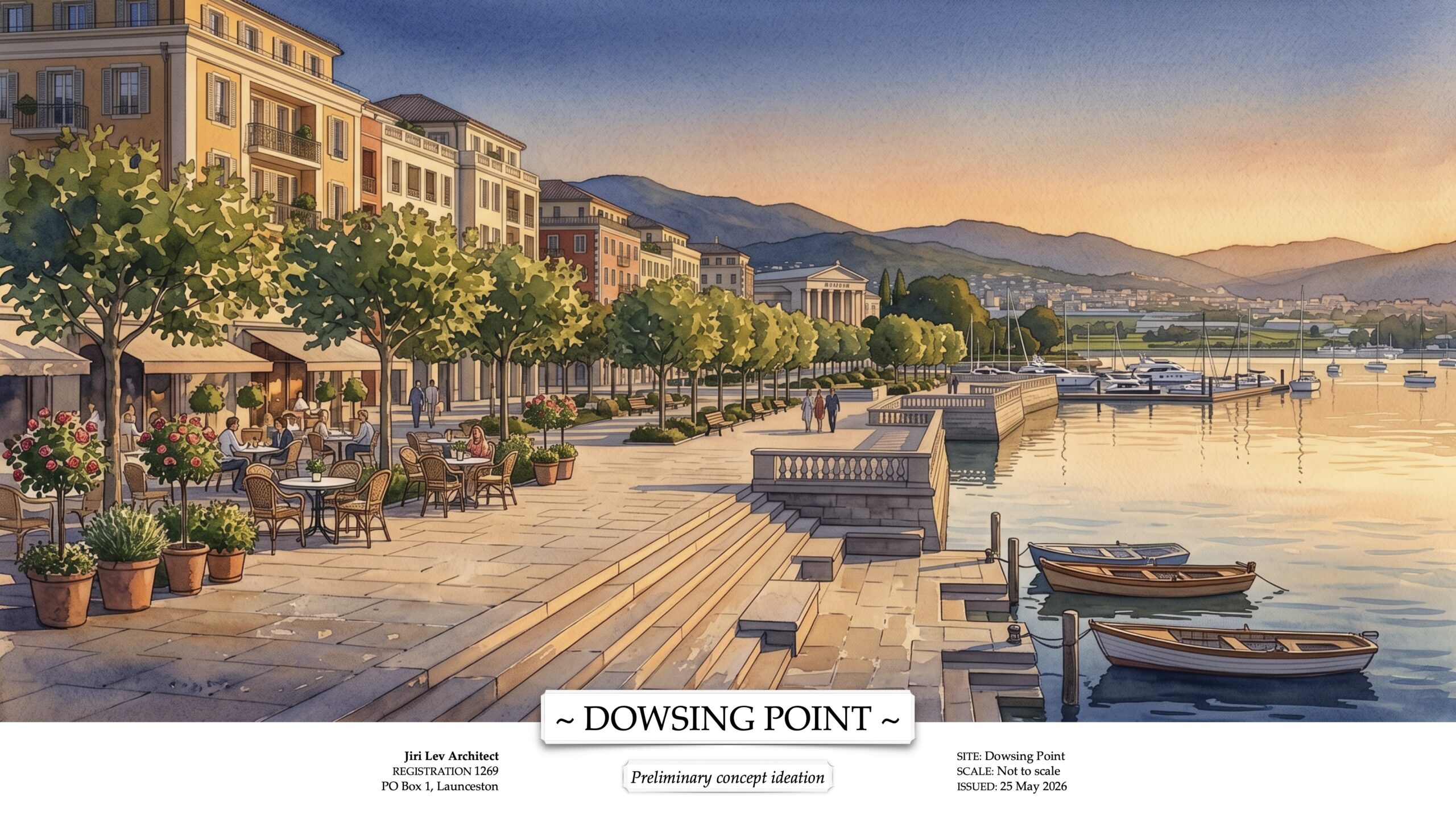
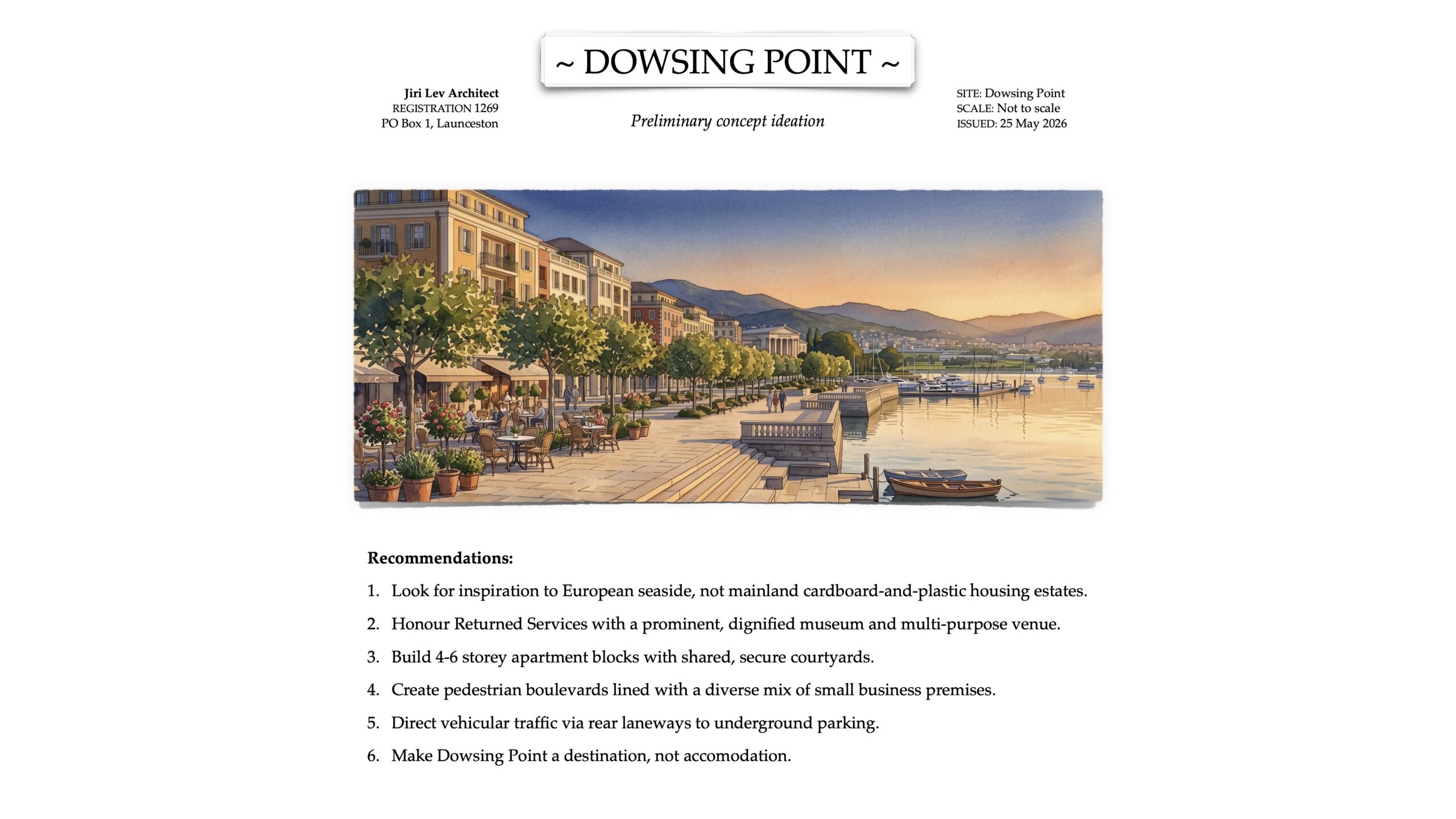
There is currently significant public discourse regarding the Dowsing Point development consultation and masterplanning process. While I do not claim to understand every site intricacy, nor defence implications, a few key issues are clearly emerging, which I respectfully submit as a contribution to the public debate.
Look for inspiration to European seaside, not mainland cardboard-and-plastic housing estates.
Honour Returned & Services with a prominent, dignified multi-purpose venue, including new cadets centre and accommodation; maintain and improve Defence and Veterans Workshop.
Build 4-6 storey apartment blocks with shared, secure courtyards.
Create pedestrian boulevards lined with a diverse mix of small business premises.
Direct vehicular traffic via rear laneways to underground parking.
Make Dowsing Point a destination, not just accomodation.
Some of these principles are not site-specific and should be applicable to any new, quality residential development.
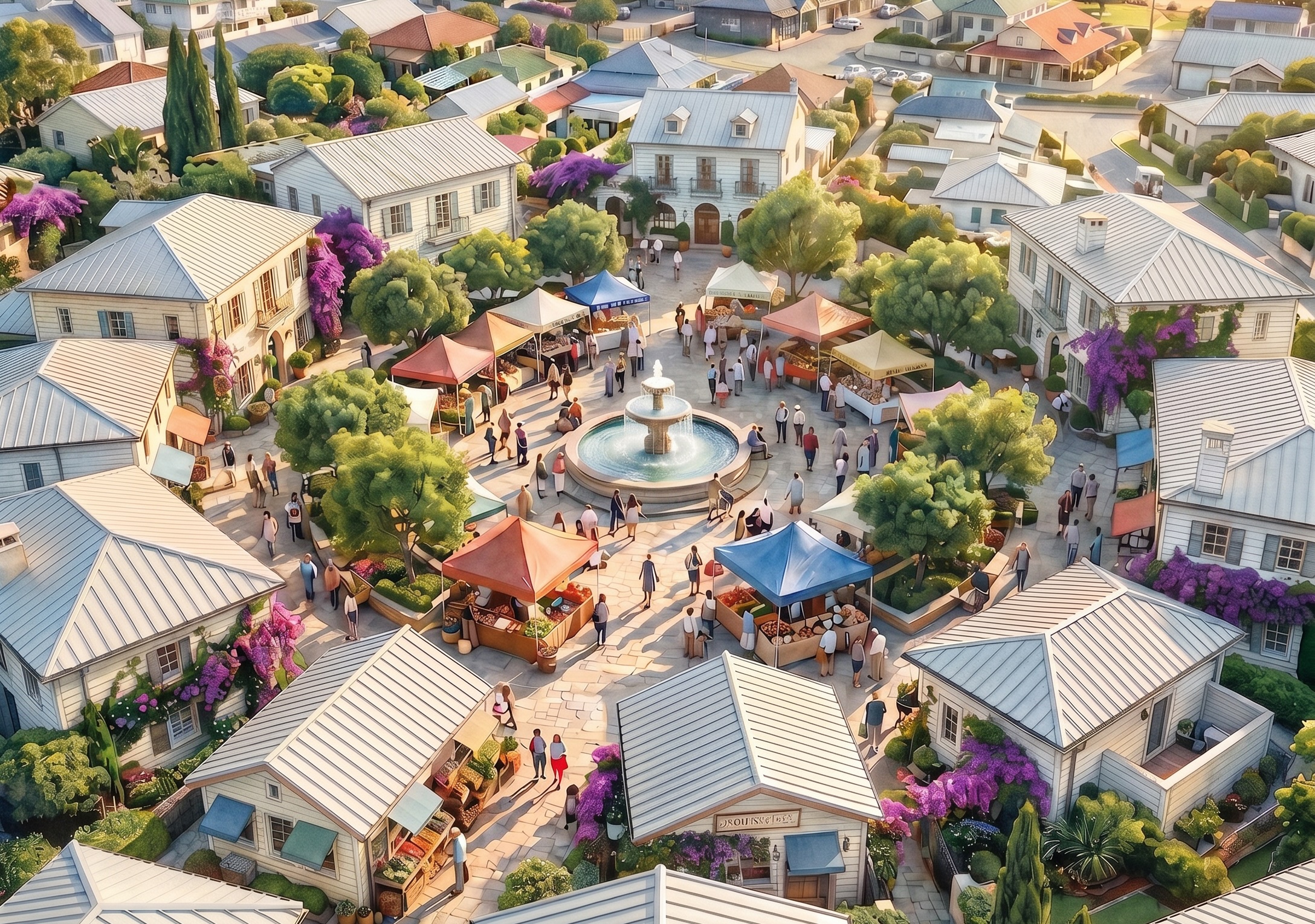
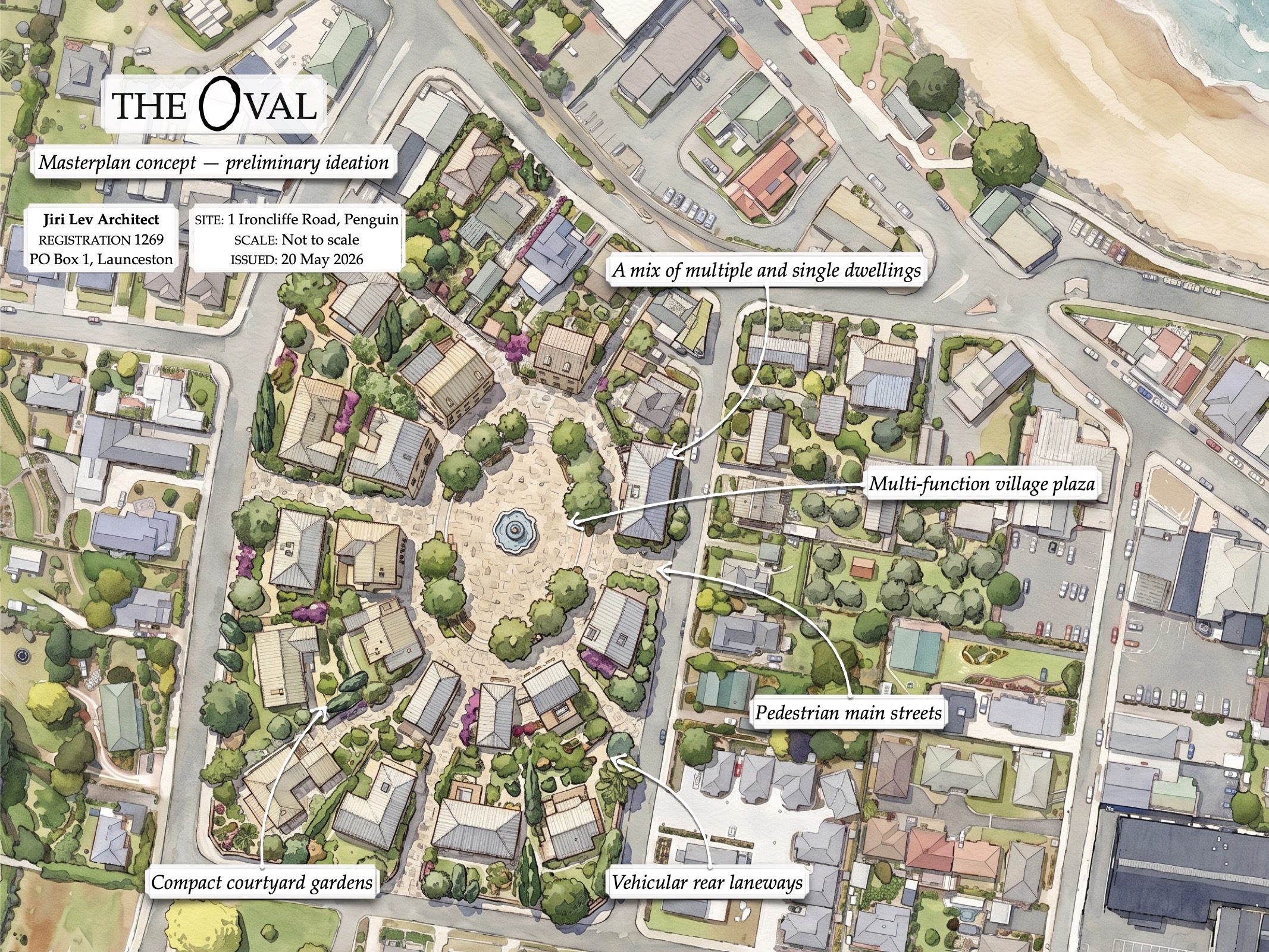
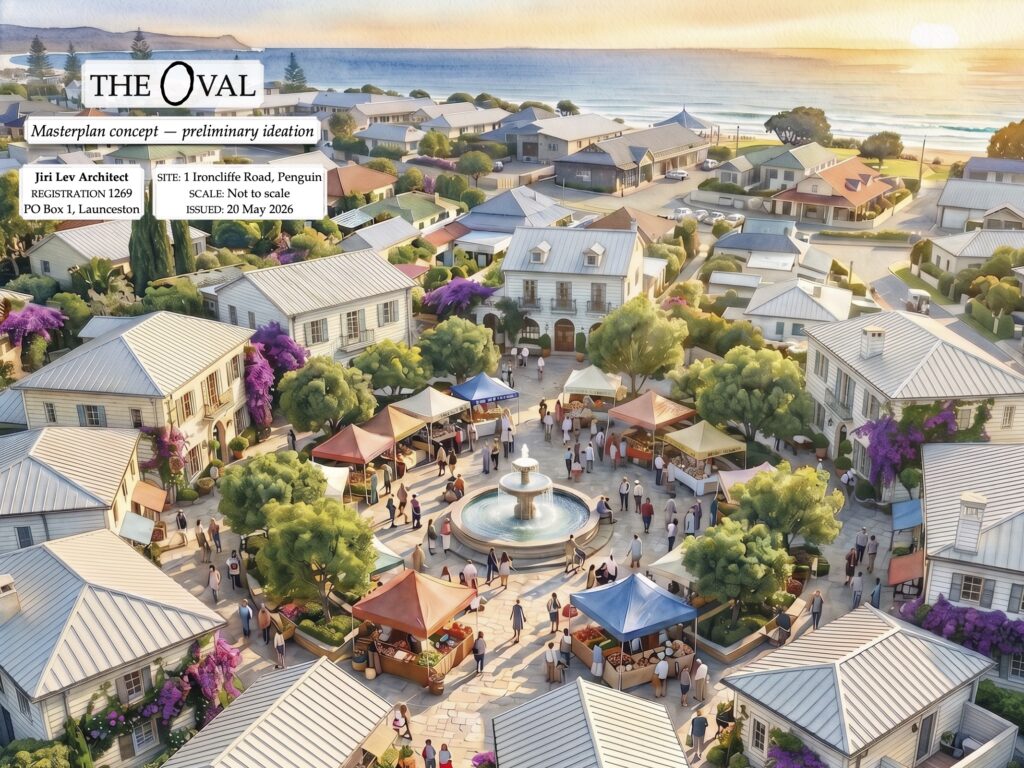
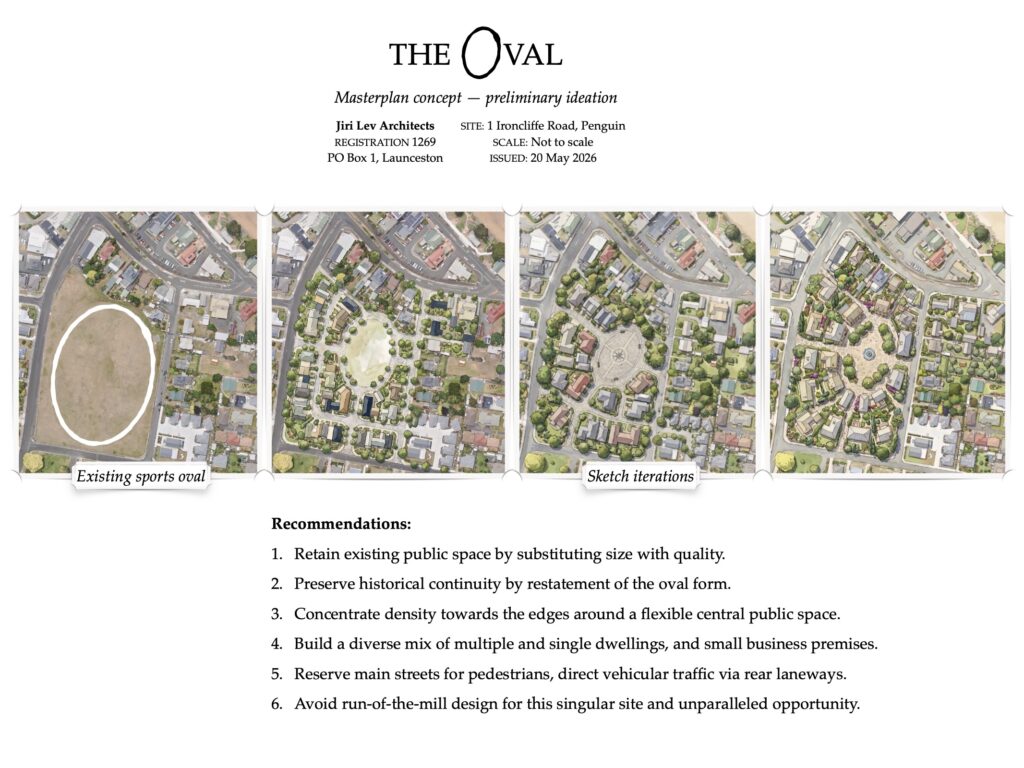
The impending development of the old Penguin oval was brought to my attention perhaps too late, but here is a humble take on how we could avoid a run-of-the-mill design for this singular site and unparalleled opportunity.
Retain existing public space by substituting size with quality.
Preserve historical continuity by restatement of the oval form.
Concentrate density towards the edges around a flexible central public space.
Build a diverse mix of multiple and single dwellings, and small business premises.
Reserve main streets for pedestrians, direct vehicular traffic via rear laneways.
A copy was sent to State Planning – if you like these ideas, please feel free to support them in your own public consultation submission to haveyoursay@stateplanning.tas.gov.au
Even if these points don’t assist a better outcome in this current situation, perhaps they will rest at the back of minds for the next one.
This is an independent initiative, not associated with any other party interest or commission.